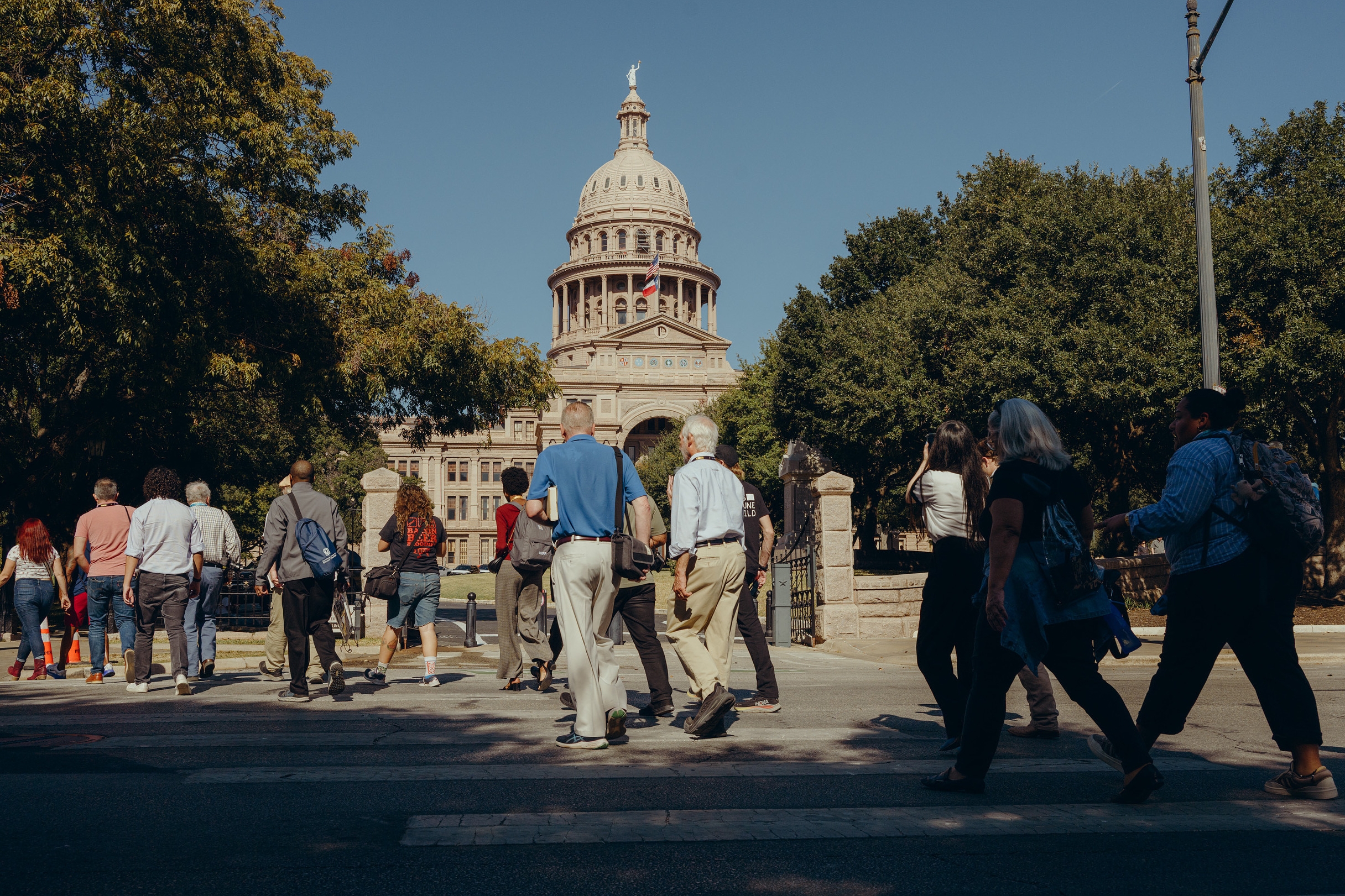
The open government track at the 2014 Texas Tribune Festival featured panel discussions on what legislators should disclose, open records, state budget transparency and “dark money” vs. donor privacy.
Bidness As Usual
With a conflict disclosure system rife with holes, virtually toothless ethics laws often left to the interpretation of the lawmakers they are supposed to regulate, and a Legislature historically unwilling to make itself more transparent, Texans know exceedingly little about who or what influences the people elected to represent them. And they have no way to differentiate between lawmakers motivated entirely by the interests of their constituents and those in it for their own enrichment.
The Texas Tribune’s Bidness As Usual Project — an extensive reporting and data venture that spanned the 2013 legislative session — looked at these lawmakers and the ethics rules that govern them, addressing issues like conflicts of interest and breaches in public accountability.
In addition to dozens of stories analyzing everything from individual lawmakers’ personal interests to the state’s disclosure forms and ethics laws, the project included the Texas Tribune Ethics Explorer.
This interactive tool was designed to educate citizens on the degree to which legislators’ personal interests conflicted with the public interest when passing bills and setting policy. It included extensive research into all 180 members of the Texas Legislature, plus the governor and lieutenant governor, and provided details on a lawmaker’s employment history and financial records, stock holdings, property listings, campaign finance data and ethics investigations. The Explorer was created with the generous support of the Fund for Investigative Journalism.

Posted in
Bidness As Usual
Liveblog: Open Government at The Texas Tribune Festival
We’re liveblogging the sessions from the 2014 Texas Tribune Festival’s Open Government track. The sessions include panels on disclosures by legislators, open records in Texas, transparency and the Texas budget, and the issue of donor privacy.

Posted in
Bidness As Usual
T-Squared: An Investigative Award

In the great-news-to-wake-up-to department, we’ve been honored by Investigative Reporters and Editors with the “Gannett Award for Innovation in Watchdog Journalism” for our livestream, our Ethics Explorer and our Bidness as Usual series.

Posted in
Bidness As Usual
News App: Expanding the Ethics Explorer


We’ve expanded the officials in our Ethics Explorer to include the judges on the Texas Court of Criminal Appeals and the members of the State Board of Education. We’ve also updated our existing analysis on members of the Legislature.

Posted in
Bidness As Usual
Ethics Explorer: Review Members of Congress
We’ve added Texas’ congressional delegation to our Ethics Explorer, an interactive tool to help educate citizens on the degree to which elected officials’ personal interests conflict with the public interest when passing bills and setting policy.

Posted in
Bidness As Usual
The Polling Center: Ethics and Public Perceptions of Perry


Texas voters are concerned about public ethics, and about some of the issues that have attached to the governor over the last 12 years — but they’re partisan about it, and that has made all the difference for Rick Perry.

Posted in
Bidness As Usual
Pension Changes to Benefit 10 in State’s Congressional Delegation

A vote by the Texas Legislature to raise state district judges’ salaries will benefit lawmakers whose state pensions are based on the judges’ salaries. Among those benefiting are 10 members of Texas’ congressional delegation.

Posted in
Bidness As Usual
Our “Bidness as Usual” Project: The e-Book


Over the course of the 83rd legislative session, we produced more than 60 articles on ethics and transparency among the state’s elected officials. We’ve turned the “Bidness as Usual” project into a free e-book.

Posted in
Bidness As Usual
UT/TT Poll: Partisan Splits on Guns in Texas

Texans strongly favor criminal and mental health background checks on all gun sales, and they are divided when it comes to concealed weapons on college campuses, according to the latest University of Texas/Texas Tribune Poll.

Posted in
Bidness As Usual
Lawmakers Collect Daily Pay Even in Recess

It doesn’t feel much like there’s a special session going on at the state Capitol, but that doesn’t mean taxpayers won’t get a bill for it. Lawmakers get paid whether they’re here or not.