

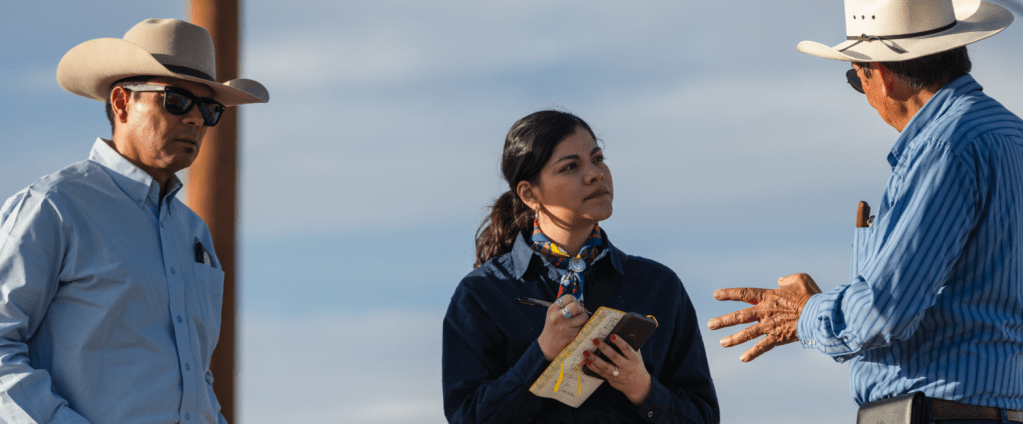


UPDATED: From transmission pipelines to desalination plants, the Texas Water Development Board approved funding on Thursday for dozens of water supply projects from Marfa to Houston, including a handful to promote conservation.

Kiah Collier
Kiah Collier was a reporter for the ProPublica-Texas Tribune investigative initiative from 2020 through 2023. She previously worked at the Tribune as a reporter and associate editor, covering energy and the environment through the lens of state government and politics. Kiah has reported for numerous other publications across Texas since 2010, including the Austin American-Statesman and the Houston Chronicle. Her beats also have included government and politics, public education and business. Kiah’s work has been honored with numerous prizes, including a George Foster Peabody Award, a Gerald Loeb Award, the Knight-Risser Prize for Western Environmental Journalism, the National Edward R. Murrow Award for best investigation and the AAAS Kavli Science Journalism Award. A seventh-generation Texan, she grew up in the Austin area and graduated with high honors from the University of Texas at Austin with degrees in journalism and philosophy.

Posted in
Energy
The Drought is Over in Texas
For the first time in more than five years, Texas no longer is in a drought. While less than 3 percent of the state remains “abnormally dry,” according to the U.S. Drought Monitor, drought has disappeared from every other part of Texas.

Posted in
Energy
Drought’s Economic Impact Spreading From Rural to Urban Areas

Despite the record dry stretch, most Texans are still far from running out of water. But the drought’s economic impact is beginning to extend beyond agriculture and into tourism, real estate and other staples of urban economies.